
How Data, Partnership, and Persistence are Changing Crisis Care in Walla Walla
On any given day in Walla Walla, the emergency department at Providence St. Mary sees patients at the most vulnerable moments of their lives.
Some arrive in a medical crisis. Others arrive in emotional or psychological distress, overwhelmed and destabilized, searching for help.
But an emergency room visit is only a snapshot in time.
“The reality is,” said Krystal Norris, Emergency Department Manager at Providence St. Mary, “this person has their whole life that they’re trying to navigate with complex housing situations, complex relationships, or even substance use disorders in addition to behavioral health conditions.”
The challenge for modern healthcare systems is not simply how to stabilize a crisis, but how to prevent the next one.
As Comprehensive Healthcare continues expanding and aligning our systems, partnerships, and services, one principle remains at the center of that work: no one should fall through the cracks.
Care coordination is the mechanism that makes that principle real. And in Walla Walla, our partnership with Providence St. Mary Medical Center is showing what that looks like when it’s done well.
“What this partnership allows us to do is look more broadly than the one moment in crisis that we’re encountering these individuals,” Norris says. “We’re able to link them with a resource that is able to follow them out into the community and then work together to make sure that they have all of the tools and resources that are available to them in order to be successful.”
For years, Comprehensive Healthcare and Providence St. Mary have worked alongside one another. The partnership between the organizations is not new, but in recent years it has become more polished and accountable, strengthening operations for both organizations.
We’re able to link them with a resource that is able to follow them out into the community and then work together to make sure that they have all of the tools and resources that are available to them in order to be successful.
Krystal Norris, Emergency Department Manager
at Providence St. Mary
Through a Certified Community Behavioral Health Clinic (CCBHC) Planning Grant from SAMHSA, Comprehensive Healthcare built stronger infrastructure for this work: clearer agreements, shared metrics, and consistent review.
“The CCBHC framework helped formalize the partnership we already had and strengthen it,” said Louise Dyjur, Chief Nursing Officer at Providence St. Mary. “It made clearer what services each of us offers, how we could work together, and set up ways to see whether we’re meeting what we set out to meet.”
The shift, colleagues say, is subtle but meaningful: from collaboration by proximity to collaboration by design.
Melissa Bowe, RN Manager at Providence St. Mary, described it this way: “This allows us to show it on paper – from both sides – and have a clear understanding of our common goals so we can prove we’re moving in the right direction for our community.”
Now, every other week, leaders from both organizations meet to review shared key performance indicators: emergency department utilization, crisis response times, and follow-up contact within 24 hours.
“We didn’t want to just talk about partnership,” said Abby Harnett, Comprehensive Healthcare’s Site Director in Walla Walla. “We wanted to see the data – and ask, what are we going to do with it next? How do we get the best outcome for the clients?”
That question – what do we do next – has become the centerpiece of their work.
Few people sit closer to that intersection than Lindsey Fuchs, Program Manager overseeing Acute Care Services and Youth Mobile Outreach in Walla Walla.
“My role really is that of a community partner,” Fuchs said. “We serve the same population, and it’s about ensuring the issues needing to be addressed are being addressed for the whole person – not just the issue at hand.”
Fuchs both supervises frontline staff and provides services herself. She understands the mechanics of the system – its capabilities and its limitations.
“It’s important to have a handle on how the system should work and what our capabilities and barriers are to be the best partner,” she said.
Because there is only one emergency department in Walla Walla, she explained, individuals unfamiliar with behavioral health services often default there.
“When people don’t know about the behavioral health system, they go straight to the ER because they know they can go there for help,” Fuchs said. “Acute Care Services really works on providing education to our partners there as well as responding to provide outreach to educate. Comprehensive’s outreach model allows for us to provide that education and support in navigation by connecting individuals with appropriate resources.”
That navigation is critical. Without it, emergency visits become repetitive. With it, they become transitional.
Across the country, hospitals struggle with individuals who return to emergency rooms repeatedly – not always for medical emergencies, but because underlying social and behavioral needs remain unmet.
Walla Walla is no exception.
During one recent review meeting, a familiar name appeared on the data sheet.
“We realized we were both working with the same individual,” Harnett said. “We identified the gaps – what needs weren’t being met – and we created a plan.”
The hospital clarified how it would respond if the individual returned, and Comprehensive’s crisis team reached out proactively to help wrap around services.
The aim was not to shift responsibility. It was to close the loop.
“What we’re really trying to accomplish is to reduce those emergency room visits for them, but also for us as a healthcare system,” Dyjur explained. “We want people to get the care they need in the appropriate spaces that they need it. Whether it’s a social need, a financial need, or whatever it is that Comprehensive can help with, the more that we have those resources to serve the community for medical care needs. It really is a very close, symbiotic kind of relationship.”
Repeated visits, leaders emphasize, are signals of an unmet need.
“If someone is utilizing the emergency department more frequently,” Norris said, “that should be an indicator that their needs aren’t being met. How do we take that one step further to make sure we get them what they need?”
One of the clearest examples of responding to those signals emerged during the pandemic, when pediatric behavioral health visits to the emergency department surged.
Through their partnership, Providence St. Mary identified a growing need among youth experiencing behavioral health crises – many of whom lacked immediate access to appropriate community-based support.
That insight helped shape Comprehensive Healthcare’s Youth Mobile Outreach team.
Youth Mobile Outreach is part of Comprehensive Healthcare’s Acute Care Services and functions as a community-based crisis response for youth and their families. Instead of defaulting to emergency departments, trained behavioral health professionals meet youth where they are – often in their homes – to assess safety, stabilize the situation, connect families to services, and build skills that reduce future crises.
“Increased youth behavioral health needs are what moved the healthcare authority to build youth mobile outreach programming,” Fuchs said. “Our youth team steadily works with youth and their families in acute distress to keep them out of the emergency rooms and high cost psychiatric hospitalization placements, and in our communities working on the skills and addressing the barriers that they have.”
It is a model shaped by a real, observed need in the community rather than theory. Over time, the results have been evident in both metrics and trust.
“Our clients get more targeted care, especially those who are more acute,” Fuchs said. “We’re able in real time to call meetings, troubleshoot over email, provide consultation on safety measures. These small things impact client care by providing guidance to the teams doing the work.”
Harnett describes the environment now as transparent and accountable.
“It’s become a safe space to say, ‘We experienced this – how do we resolve it? We’re not operating in silos anymore.” As healthcare grows more complex – with social drivers of health increasingly shaping outcomes – leaders on both sides say collaboration is no longer optional.
“We continue to see more complexity in our patient population when it comes to social drivers or social determinants of health,” Norris states. “I think these partnerships will continue to be extremely beneficial to our patients and our community at large.”
This partnership is just one way to address those complexities, providing flexible services that meet clients where they are, while ensuring medical resources are used appropriately.
“Our community is constantly developing, so we have to be able to as well,” Bowe says. “We can’t do the same thing over and over again forever. We have to be able to adjust and be resilient to those changes.”
Harnett agrees.
“I don’t think one organization can do it all alone. We all need each other.”
Bowe adds one final thought: “The more that we learn about one another’s capacity, the more we can build processes that work for our community. Every chance we get, we take the opportunity to learn from one another and strengthen that partnership even more.”
In coordinated care, success is measured in relationships – between systems, between providers, and between people determined that crisis should not be the final chapter.
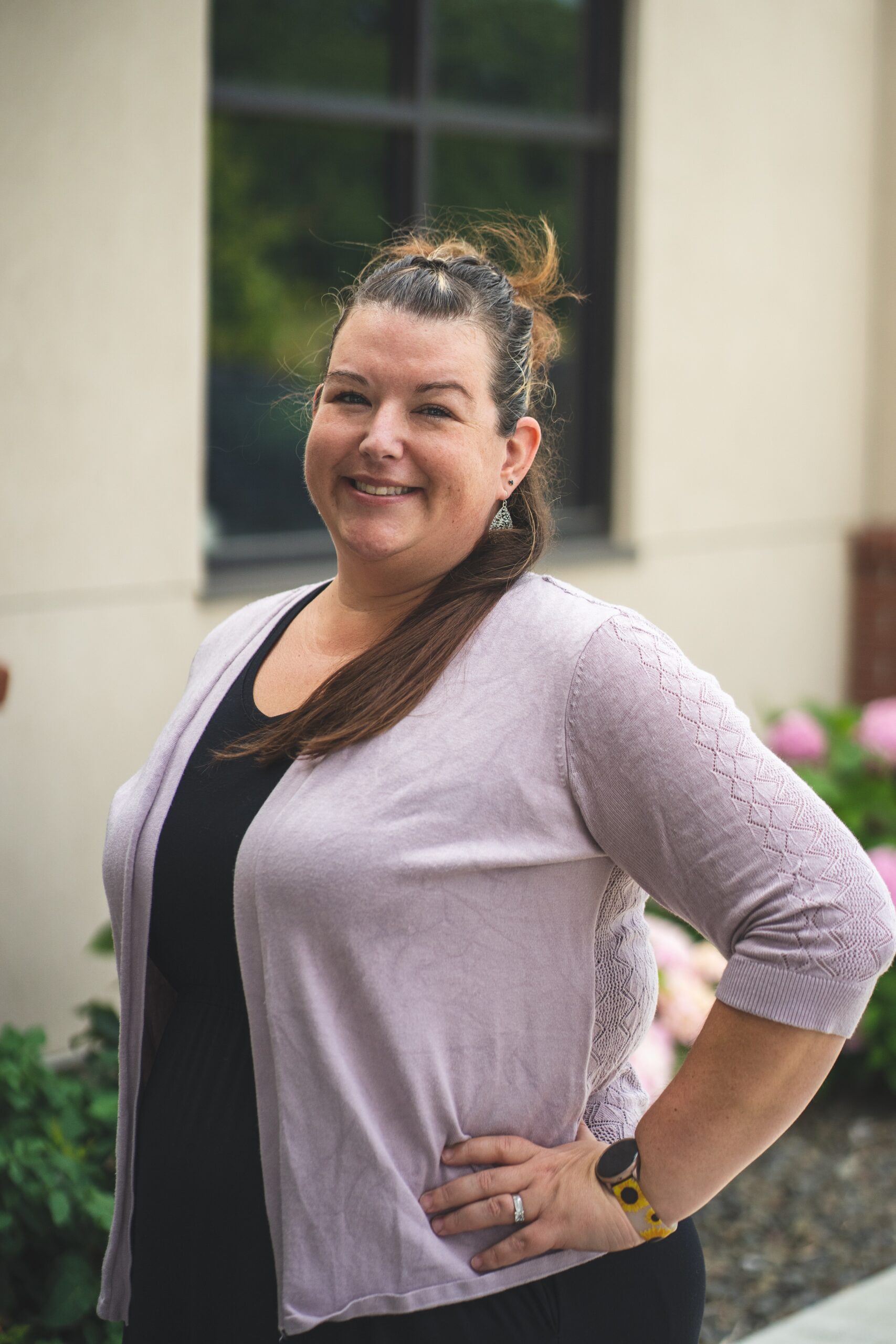
Lindsey Fuchs
Program Manager, Acute Care Services and Youth Mobile Outreach