
For many people experiencing homelessness, the biggest barrier to getting help isn’t a lack of services – it’s distance. A clinic across town might as well be a hundred miles away when you don’t have transportation, an ID, insurance, or the stability to keep an appointment. That’s the gap Comprehensive Healthcare set out to close at Camp Hope.
Bringing Care Directly to the Community
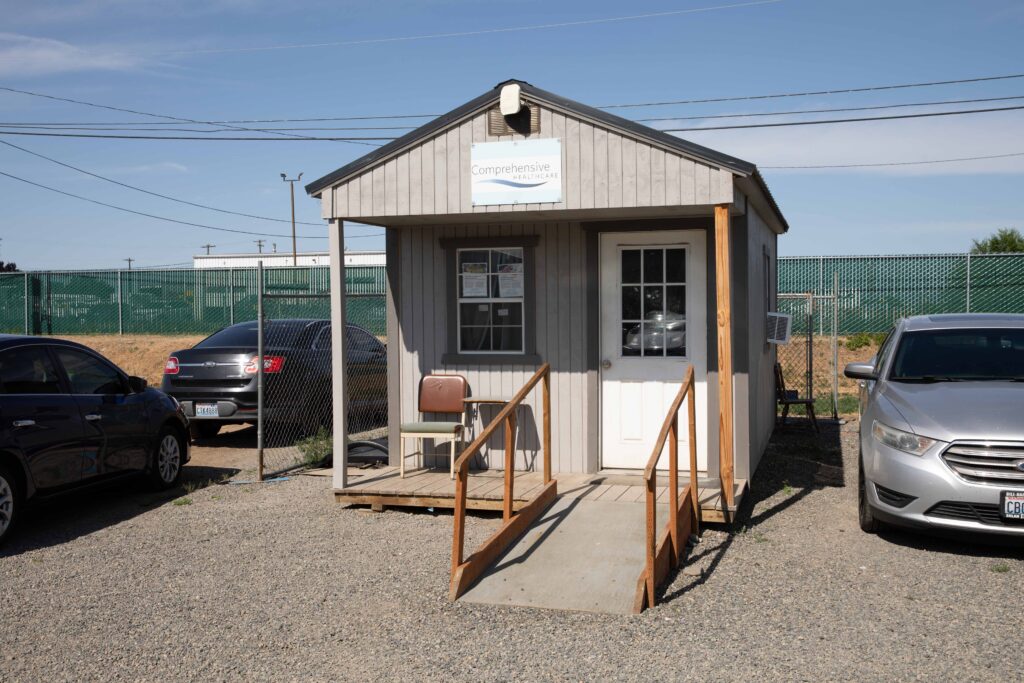
Camp Hope is home to some of Yakima’s most vulnerable neighbors, many of them navigating mental illness, substance use, and chronic health conditions without a safety net. Rather than waiting for residents to find their way into the system, Comprehensive brings the system to them. Peer support counselors, case managers, care coordinators, and our ARNP are on site regularly, offering primary care, medication access, and care coordination to residents.
Why It’s Needed
Homelessness and behavioral health struggles feed each other in a cycle that’s hard to break. Untreated conditions make it harder to stabilize; instability makes it harder to access treatment. On-site care interrupts that cycle at the point where people actually are, building trust over time instead of asking someone in crisis to navigate an appointment system built for people with a permanent address and a phone that stays charged.
What’s New: Compassion Cabins
One of the most visible parts of this partnership is the Compassion Cabins – small, one-bedroom homes converted from repurposed shipping containers. They give residents something a tent can’t: a locking door, a private space to stabilize, and a real step between living outside and living in permanent housing. For someone working toward independence, that middle step can make all the difference.
What’s Next: An On-site Behavioral Health Center
Looking ahead, Comprehensive is working toward establishing a full behavioral health facility on site at Camp Hope. Instead of a rotating team visiting a few days a week, residents would have consistent, dedicated access to care in a space built for it – deepening the relationships already being built and expanding what’s possible for treatment and recovery right where people live.


At its core, this partnership is simple: meet people where they are, treat them with dignity, and build the kind of trust that makes lasting recovery possible.
