

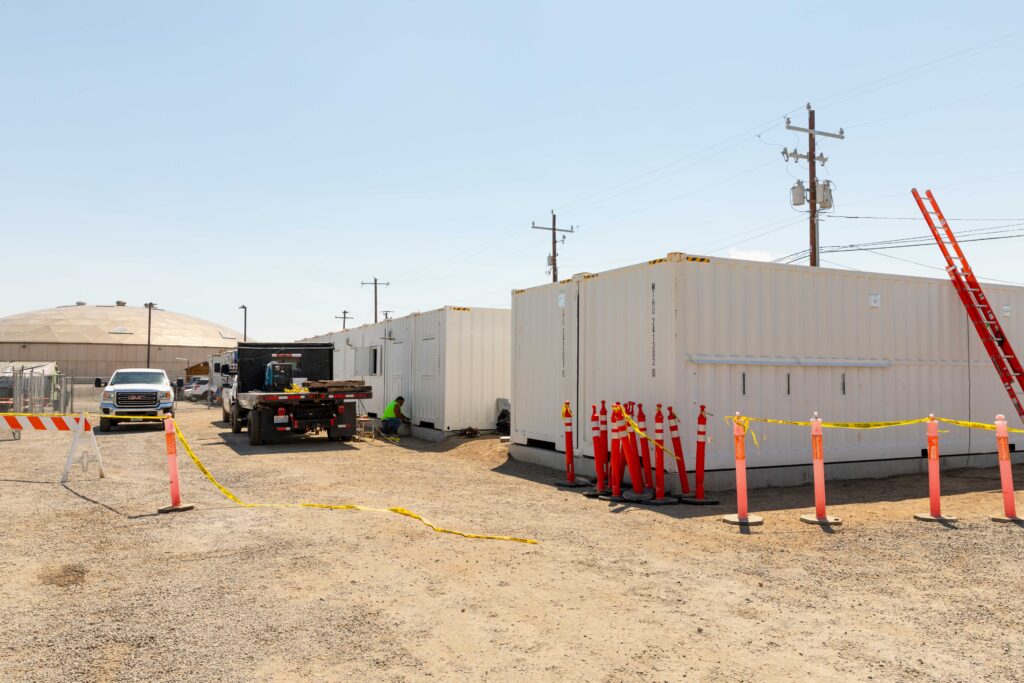
Construction is in its final weeks at the Camp Hope Center for New Beginnings – 18 compassion cabins and an on-site behavioral health center, all built from shipping containers.
After years of work, Comprehensive Healthcare’s Center for New Beginnings at Camp Hope is nearing the finish line. The project pairs two things that rarely exist on the same campus: safe, private shelter and behavioral health care delivered right where people are living.
The compassion cabins have received occupancy. Work continues on the behavioral health building, with completion expected by the end of August. An open house is planned for September, once the campus is finished, so partners, staff, and community members can walk the site and see the work firsthand.
A different kind of construction
Every structure in the Center for New Beginnings – all 18 cabins and the behavioral health center – began as a shipping container.
The units were fabricated off-site, then transported to Camp Hope and set in place. But modular doesn’t mean simple. Foundations still had to be poured. Electrical had to be run, plumbing tied in, mechanical systems connected, and every unit finished out and inspected – the last of that work is wrapping up now. The approach traded months of on-site framing for precision work in a controlled environment, and it delivers structures built to last at a fraction of the conventional cost.
It’s a fitting method for the project. Shipping containers are designed to be durable, weather-tight, and endlessly reusable – the same qualities you’d want in a shelter meant to carry people through their hardest season.
Eighteen Cabins
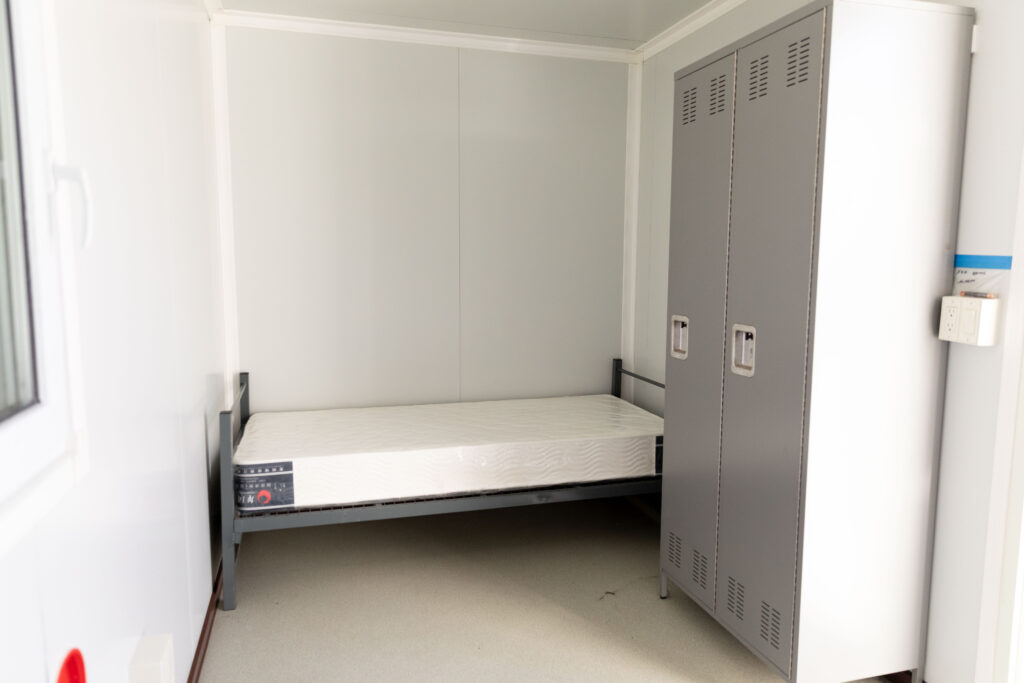
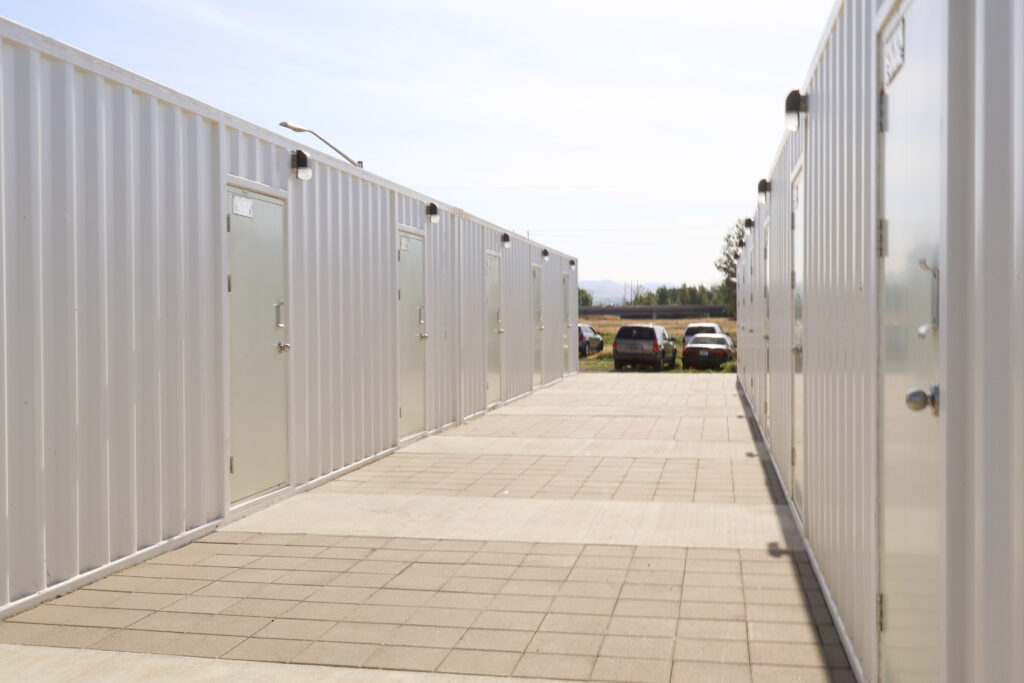
The compassion cabins offer individual, lockable units. This is a meaningful step up from congregate shelter for people who need privacy, security, and rest. Air conditioning units are being placed in each cabin so the cabins remain livable through Central Washington summers. Each cabin also has a window, and plenty of ventilation.
Six of the cabins are larger and are planned to house families. Demand for family units consistently outpaces supply in our region, and these six begin to address a waiting list that has been substantial for some time.
Care where people already are
Transportation is one of the most persistent barriers to behavioral health care. A missed bus becomes a missed appointment, and a missed appointment can undo weeks of progress. Locating services on the Camp Hope campus removes that barrier entirely.
The behavioral health building was designed for flexibility:
- Four group rooms: two small, one medium, one large. Sized for everything from a handful of people to a full-campus gathering.
- Three offices for individual sessions and confidential conversations.
- Two exam rooms, each with a sink and cabinetry, to support physical health needs alongside behavioral health care.
- A full kitchen and restroom, so the building can function as a genuine gathering space rather than a strictly clinical one.
A kitchen and a large group room turn a treatment building into a community building, making this a place where people can share a meal, watch a movie together, or take part in programming that has nothing to do with a treatment plan and everything to do with belonging.
Additional uses for the space are under discussion, including community-building activities and partnerships focused on workforce development and employment readiness. More on those as they take shape.
What’s next
Final preparations are underway. Details on the September open house will follow in the coming weeks.
Recovery rarely starts with a clinic visit. It starts with a safe place to sleep, a door that locks, and someone nearby who’s ready to help when you’re ready to ask.
Questions about the Center for New Beginnings? Contact the Marketing and Communications team.
